
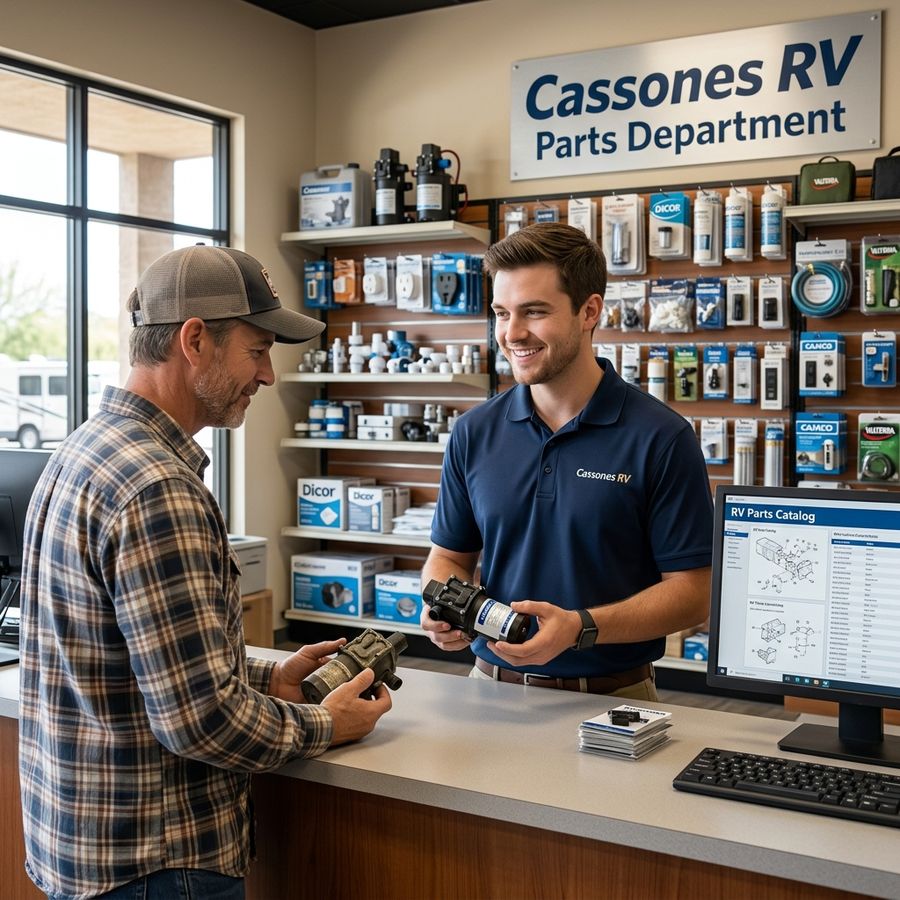
From the Parts Counter: Real Insights on the Most Commonly Shopped RV Parts
Step up to any busy RV parts counter during the blistering peak of a desert summer, and you will quickly realize that recreational vehicle ownership is a constant battle against the elements. Here in the East Valley of the Phoenix metropolitan area, that battle is fought under a relentless sun that regularly pushes thermometers past 115 degrees. When you are traveling across our beautiful but unforgiving landscape, knowing which components are most likely to degrade, wear out, or fail is not just trivial trivia—it is the difference between an unforgettable memory-making road trip and a miserable afternoon stranded on the shoulder of Interstate 10. At Cassones RV Repair and Sales, we see the real-world consequences of the desert environment on all classes of motorhomes and trailers every single day.
Our parts department handles hundreds of inquiries weekly from seasoned full-timers, weekend warriors, and those embarking on their very first road trip. What we have discovered over decades of hands-on diagnostics, repairs, and retail sales is that RV parts shopping habits follow highly predictable patterns. These patterns are heavily dictated by preventive maintenance cycles, seasonal environmental stresses, and the inherent structural vulnerabilities of a house on wheels bouncing down highways. By understanding which parts are most commonly shopped, you can build a smarter onboard spare inventory, anticipate failures before they ruin a vacation, and make informed choices when purchasing replacement components.
In this deep-dive guide, we are pulling back the curtain on our internal inventory records, sharing real-world observations from our repair bays, and offering direct advice from our parts counter. We will explore the critical role of routine maintenance items, look honestly at the plumbing and electrical systems that fail most frequently under extreme heat, and break down the financial differences between OEM and aftermarket solutions. Whether you are looking to Browse Our Parts Catalog for a DIY project or trying to diagnose an active issue, our goal is to provide the ultimate reference guide for keeping your coach, trailer, or fifth wheel in peak operating condition.
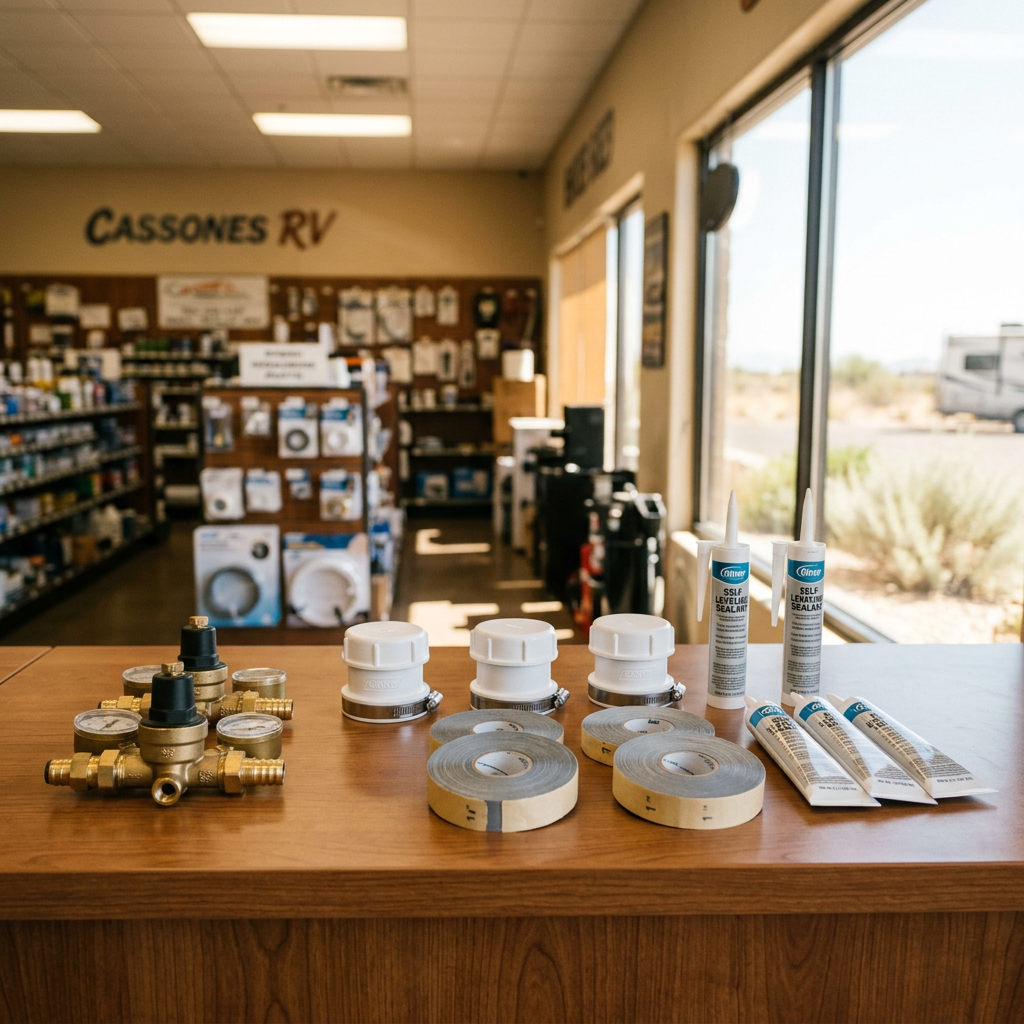
Living and traveling in the Southwest demands a proactive mindset. The dry heat, intense ultraviolet radiation, and blowing dust of the Sonoran Desert act as an accelerant for wear and tear. Rubber dries out, plastics become brittle, electrical contacts corrode, and cooling systems work twice as hard to maintain comfortable temperatures. As we walk through the specific categories of high-demand parts, keep in mind that many of these components are inexpensive to buy and relatively simple to replace if caught early, but catastrophically expensive to ignore. Let us dive in and examine what keeps our parts department buzzing year-round.
Meet Your Parts Expert: Real-World Experience in Mesa, Arizona
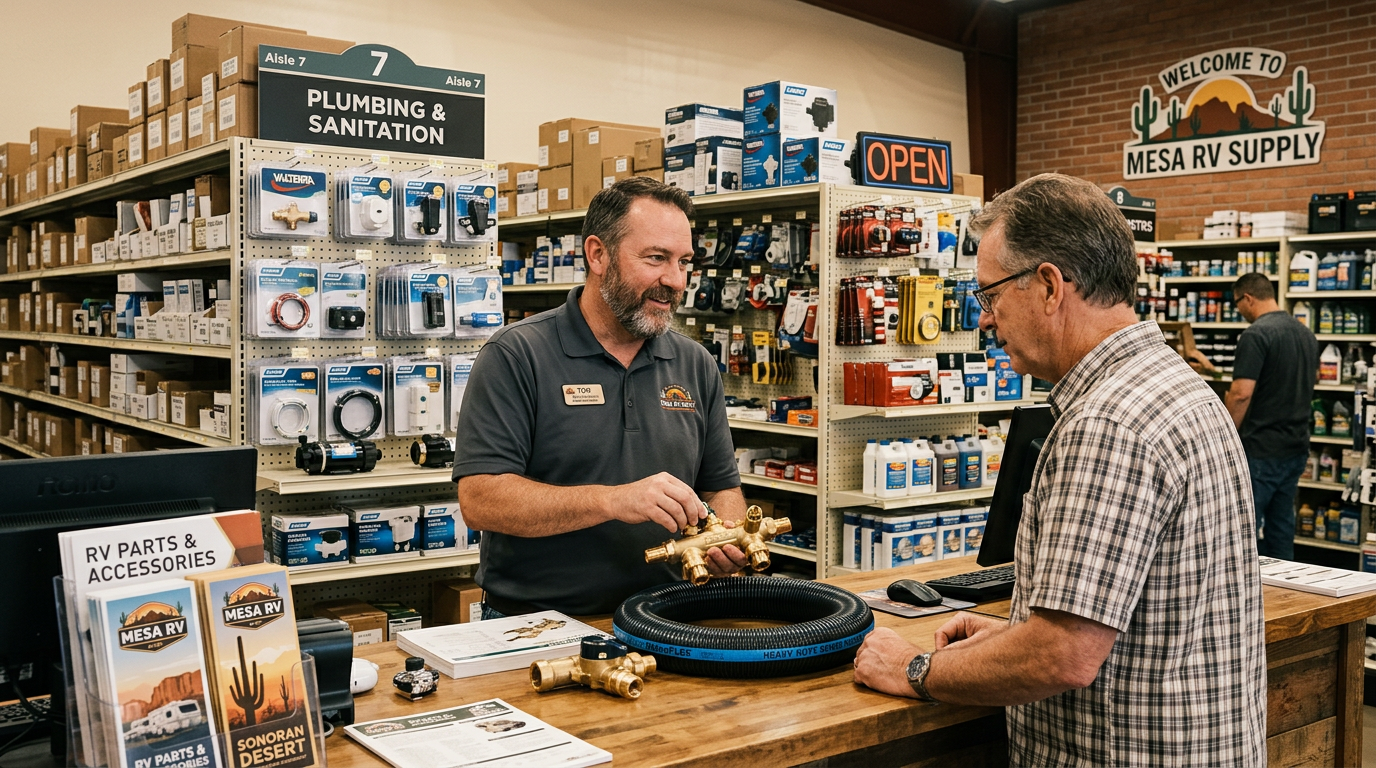
Our central location makes us a convenient hub for RVers throughout the Phoenix metro area. We constantly monitor local and national travel trends to ensure our warehouse is stocked with seasonal essentials. During the summer, you will find our shelves packed with high-efficiency air conditioner shrouds, heavy-duty cooling system components, robust electrical protection gear, and high-grade sealants. We believe that empowering our customers with accurate, honest information is the best service we can offer. Read on as we share the exact data and patterns we observe from behind the counter every day.
What Are the Most Commonly Replaced RV Parts During Regular Maintenance?
Preventive maintenance is the absolute bedrock of successful RV ownership. Unlike a stick-built home, an RV is subjected to constant low-level seismic activity as it travels down the road. This vibration slowly loosens plumbing connections, stresses structural seams, and causes moving parts to fall out of alignment. When you combine this physical vibration with the extreme, bone-dry heat of Arizona, your maintenance schedule must accelerate. The parts that are shopped most frequently in our department are those designed to be consumed, inspected, and replaced as part of a rigorous upkeep routine.
The dry heat of the Sonoran Desert acts like a silent clock ticking down on every rubber seal and plastic component on your rig. Slide-out wiper seals, which keep dust, pests, and moisture out of your living space, lose their elasticity and tear if they are not regularly conditioned. When these seals dry out, they place extra strain on your slide-out motors, leading to incredibly expensive mechanical repairs down the line. Keeping a fresh tube of premium roof sealant, a clean water filter, a spare anode rod, and a can of high-quality slide lubricant in your storage bay is the cheapest insurance policy you can buy.
If you are unsure of the condition of your roof seals, slide-out mechanisms, or water systems, do not leave it to chance before your next trip. Our highly skilled technicians can perform a comprehensive inspection and handle any necessary replacements. You can easily Schedule RV Repair Services online to have our team look over your rig, ensuring every critical seal and maintenance component is fully prepared to withstand the extreme heat and demanding road conditions ahead.
The Dirty Truth: How Often Do You Need to Replace an RV Sewer Hose?
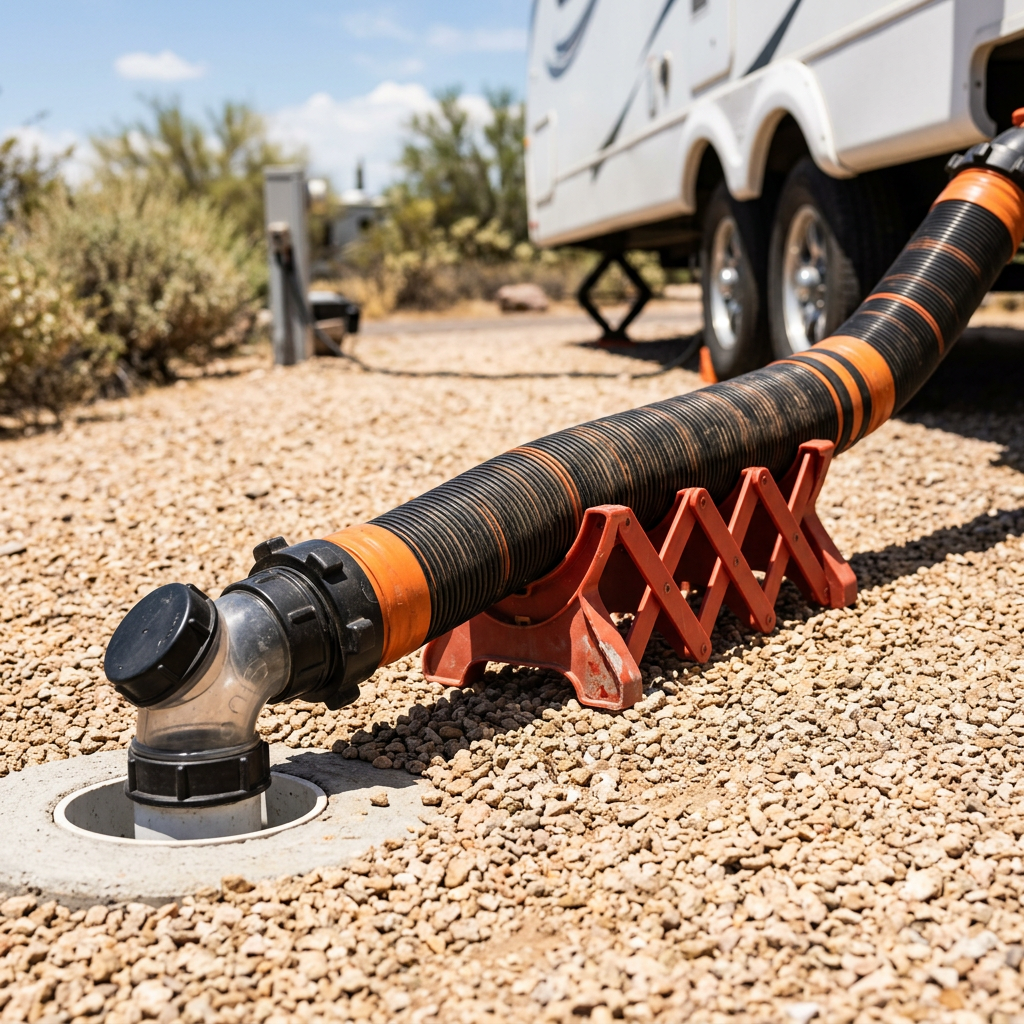
Beyond the hose itself, the seals inside your bayonet fittings and waste valves also require close attention. When waste valves dry out, they become difficult to pull and can develop slow leaks, allowing liquid to escape while leaving solid waste behind in the tank—a condition affectionately known in the industry as a ‘pyramid plug.’ We recommend replacing your primary sewer hose every 12 to 24 months depending on usage, and always carrying a high-quality spare hose and extra rubber gaskets in your storage bay. If you want to avoid a messy situation, proactive replacement is the only way to go.
Expert Perspective: Why Desert RVers Can’t Ignore Preventive Parts
“In my years running this parts department, I’ve noticed a clear divide between RVers who treat maintenance as an ongoing responsibility and those who treat it as a reaction to a crisis. In the Arizona desert, the environment does not negotiate. If you ignore a dry-rotting roof seal, a worn-out water pump, or an aging electrical connector, the desert summer will find that weakness and expose it at the worst possible moment. Waiting for a critical component to fail on a 110-degree afternoon on the way to the Rim is a recipe for a ruined vacation and a massive towing bill. Spending fifty bucks on preventive parts today is the smartest investment you can make.”
— Parts Manager, Cassones RV Repair and Sales
What Electrical and Electronic Parts Do RV Owners Buy Most Often?
Modern recreational vehicles are marvels of mobile engineering, packed with sophisticated 12V DC and 120V AC electrical systems. From smart solar arrays to delicate control boards, your RV relies on a steady, clean flow of power to run everything from the refrigerator to the air conditioner. Unfortunately, electrical components are highly sensitive to thermal stress, voltage fluctuations, and physical road vibrations, making them some of the most frequently shopped items in our entire inventory.
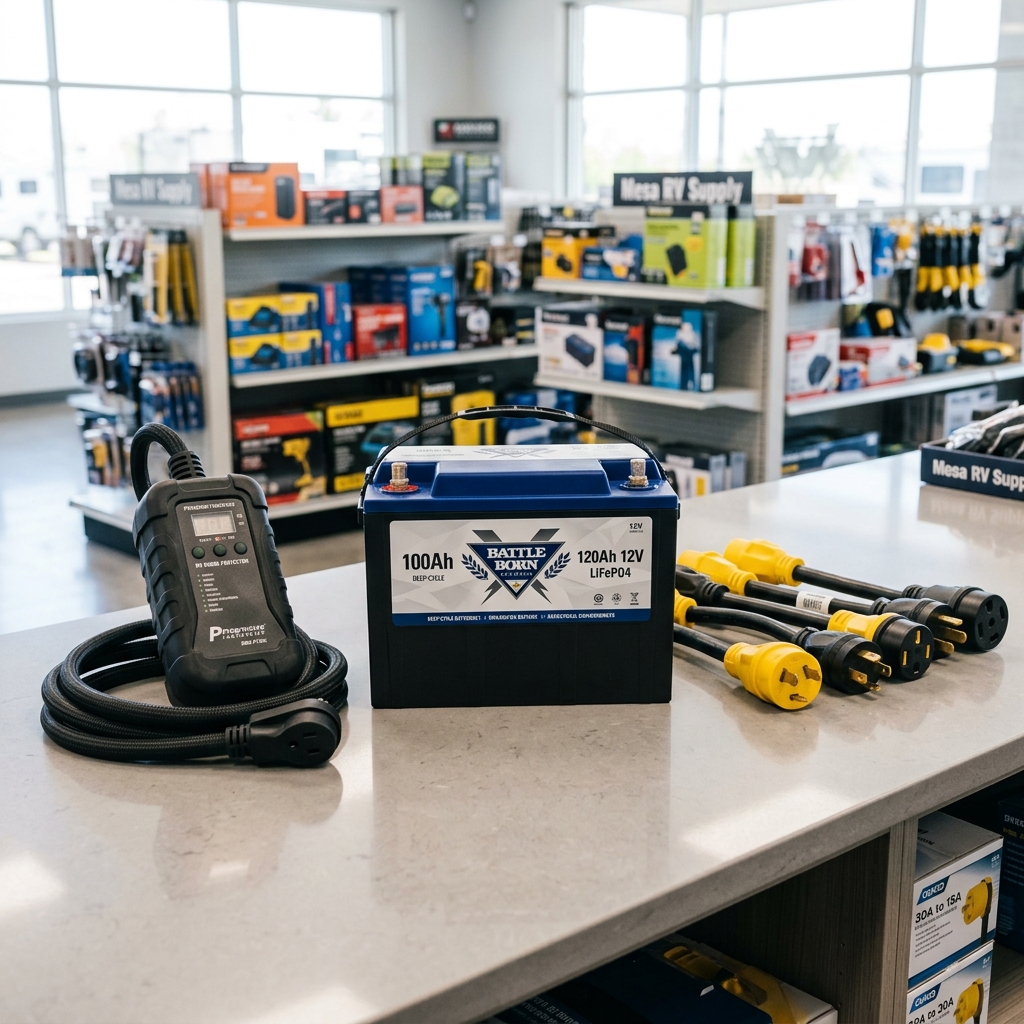
Whether you are a weekend warrior or a dedicated boondocker exploring the vast public lands around the Southwest, maintaining a robust, protected electrical system is essential. If your rig’s electrical system needs a professional diagnostic, battery upgrade, or a solar installation, our team is standing by to help. You can easily reach out to our service department and Request Service Appointment to ensure your electrical setup is safe, efficient, and ready for your next off-grid adventure.
Is Buying OEM RV Parts Better Than Buying Aftermarket Alternatives?
This is one of the most common and highly debated questions we face at the parts counter: should you buy Original Equipment Manufacturer (OEM) parts, or is it better to go with aftermarket alternatives? The honest answer is that it depends entirely on the specific component, your budget, and what you are trying to achieve. Both paths have distinct advantages and drawbacks, and understanding those nuances is key to making a smart purchase.
When making your decision, think about the long-term impact on your RV’s value and performance. If you are replacing a major structural part, a delicate appliance motherboard, or a body panel, sticking with OEM is usually the safest and most reliable choice. However, if you are replacing wearable items like shocks, plumbing fixtures, batteries, or lighting, high-quality aftermarket upgrades often represent a massive leap forward in comfort, efficiency, and overall reliability. At Cassones RV, we can help you weigh the pros and cons of both options for your specific repair.
Do Aftermarket Parts Void My Manufacturer RV Warranty?
One of the most persistent and damaging myths in the RV industry is that installing any aftermarket part or accessory will immediately void your manufacturer’s warranty. This fear often leads owners to pay premium prices for OEM components when a superior, more affordable aftermarket solution is readily available. It is time to clear up the confusion with actual legal facts.
In the United States, consumer warranties are strictly protected by a federal law known as the Magnuson-Moss Warranty Act of 1975. Under this federal statute, an RV manufacturer or dealer cannot legally void your entire vehicle warranty simply because you installed an aftermarket part. For a manufacturer to deny a warranty claim, they must prove conclusively that the aftermarket component was directly responsible for causing the specific failure you are trying to have repaired.
For example, if you install an aftermarket high-efficiency water pump and a week later your slide-out motor fails, the manufacturer must honor the slide-out repair because the water pump had absolutely nothing to do with the electrical failure of the slide mechanism. However, if the aftermarket water pump was wired incorrectly, caused a short circuit, and melted the main 12V wiring harness, the manufacturer is fully within their rights to deny coverage for that specific electrical damage. Knowing your rights under the Magnuson-Moss Act gives you the freedom to customize and upgrade your rig with confidence.
When upgrading your RV, the key is ensuring that any aftermarket parts are of high quality and installed professionally. If you have been dreaming of upgrading your rig’s suspension, chassis, or body components but want to make sure it is done safely and correctly, our expert technicians can handle the job. You can easily Schedule Body Shop Repair or mechanical service with us to guarantee your upgrades are installed to the highest industry standards.
How Much Do the Most Common RV Replacement Parts Cost?
Budgeting for RV maintenance and repairs can feel like trying to hit a moving target. To help you plan and prioritize your parts purchases, we have compiled a transparent cost breakdown of the most commonly shopped replacement parts. These ranges reflect typical retail prices for standard travel trailers, fifth wheels, and motorized coaches. Please note that prices can vary based on specific brand compatibility, sizing, and premium features.
| Part Category | Average Price Range (Parts Only) | Estimated Lifespan / Maintenance Interval |
|---|---|---|
| Heavy-Duty Sewer Hose Kit | $45 – $95 | 12 – 24 Months (depending on UV exposure) |
| 12V On-Demand Water Pump | $75 – $160 | 3 – 5 Years (ensure winterized properly) |
| Magnesium Anode Rod (Suburban) | $15 – $30 | Inspect annually; replace when 75% worn |
| Premium Roof Sealant (Per Tube) | $12 – $22 | Inspect every 6 months; touch up as needed |
| RV Surge Protector (30-Amp/50-Amp) | $120 – $350 | Lifetime protection (unless takes a major surge) |
| Deep-Cycle AGM Battery (100Ah) | $180 – $320 | 3 – 5 Years (heat dramatically impacts lifespan) |
| Replacement AC Shroud (Plastics) | $90 – $180 | 5 – 7 Years (check for UV brittleness/cracks) |
As you can see from the cost matrix, many of the most critical preventive maintenance parts are incredibly affordable. Spending $15 on a replacement anode rod or $12 on a fresh tube of premium self-leveling sealant can easily save you from a $2,000 water tank replacement or a $10,000 structural roof rebuild. We always recommend investing in quality over the absolute cheapest price tag—especially when it comes to systems that hold back waste, protect your electrical gear, or keep water out of your living space.
Can I Order RV Parts Online and Pick Them Up at a Mesa Location?
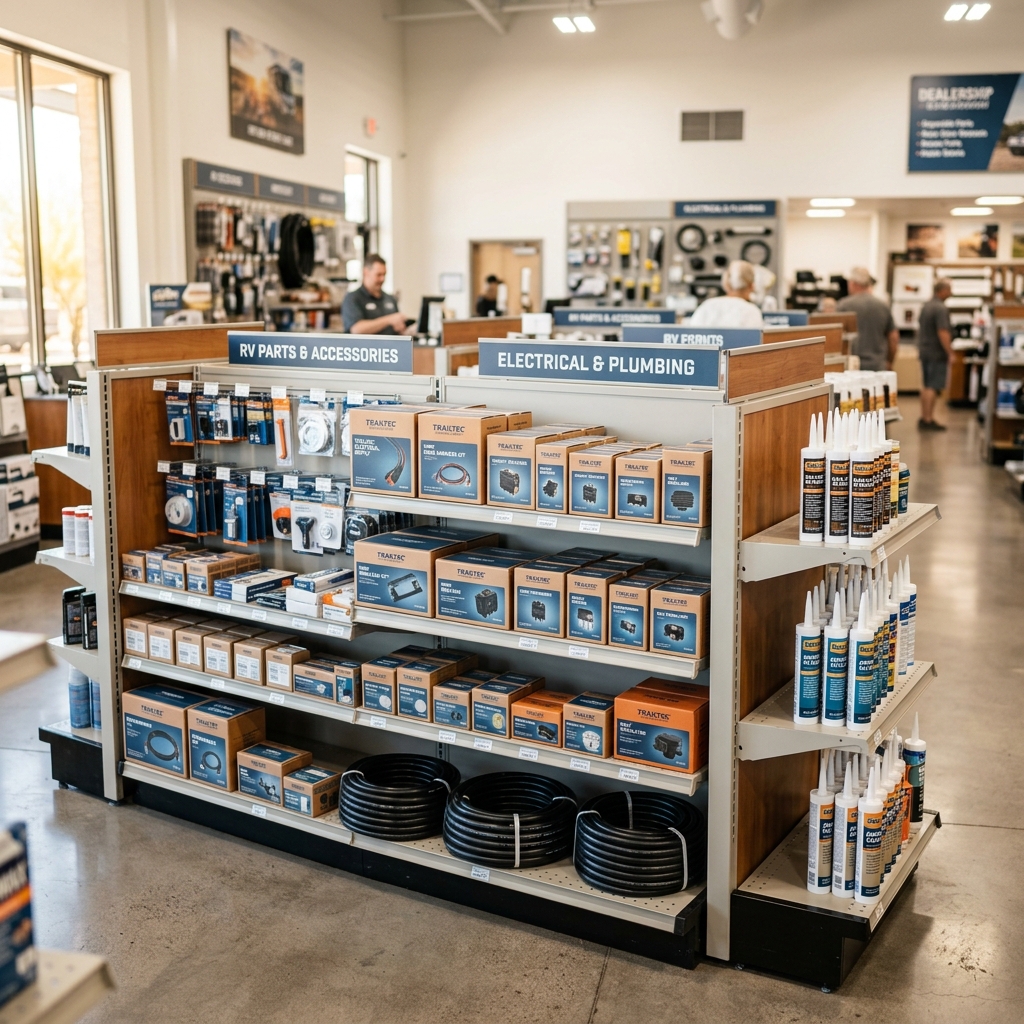
Ready to pick up your parts or consult with our experts in person? We are conveniently located right on Main Street in Mesa. You can easily Get Directions to Cassones RV Repair and Sales and stop by our fully stocked showroom to find everything you need for your upcoming adventures.
Practical Advice: Your Pre-Trip Parts Checklist Before Leaving the Valley
Before you point your RV north toward the cooler mountain air or head east out of the Phoenix valley, taking an hour to run through a comprehensive pre-trip parts and safety checklist is critical. Carrying a smart, curated selection of spare components and tools can transform an active roadside emergency into a minor, 15-minute roadside adjustment. Here is the exact checklist our parts team recommends every desert traveler keep on board:
- Spare Plumbing Fittings & PEX Connectors: PEX plumbing lines are highly durable, but plastic elbows and T-connectors can crack under vibration. Keep a few SharkBite-style push-to-connect fittings on hand.
- Fuses and Breakers: Carry a complete assortment of 12V automotive blade fuses (ranging from 5A to 30A) and a couple of spare breakers for your AC panel.
- Silicone Roof & Sealant Tape: A roll of heavy-duty Eternabond tape can instantly patch a torn membrane roof or seal a cracked skylight during an active rainstorm.
- Onboard Spare Water Pump: Water pumps are highly prone to sudden failure. Keeping a cheap, pre-tested spare on board ensures you don’t lose fresh water access while dry camping.
- Extra Sewer Hose Gaskets & Clamps: Rubber gaskets degrade, get lost, or tear. Keep a small baggie of fresh seals to prevent messy leaks during setup.
- Tire Pressure Gauge & Valve Extenders: Properly inflated tires run cooler and are far less likely to blow out on hot desert pavement.
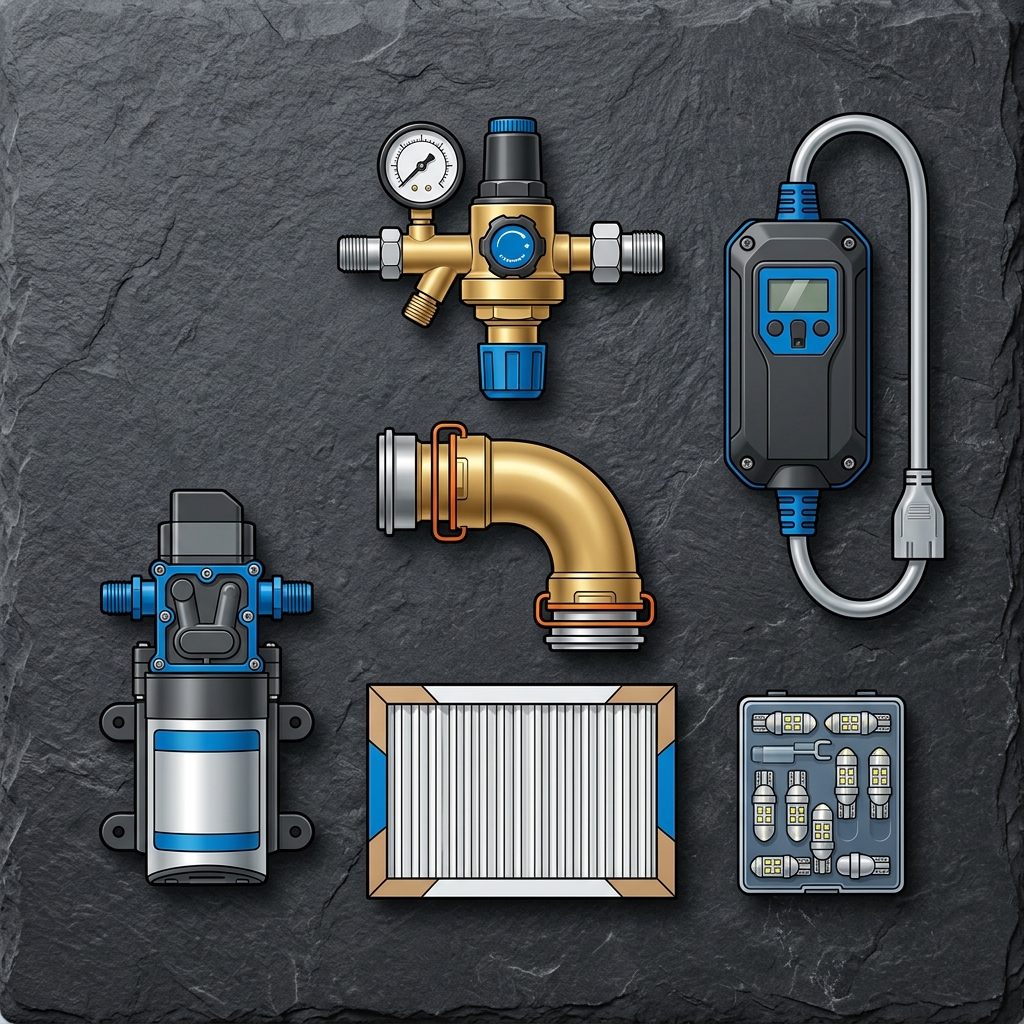
By stocking these simple, inexpensive spares, you’ll gain immense peace of mind knowing that you are fully prepared to handle the most common minor issues that occur on the road. If you are preparing for a major cross-country journey and want to make sure your vehicle’s structural and mechanical systems are in absolute peak condition, we are here to support you. We invite you to Browse RV Inventory to see our latest arrivals, or schedule a comprehensive pre-trip inspection with our service department today.
Ready to Gear Up? Contact the Cassones RV Parts Department Today
Don’t wait for a critical component to fail in the middle of your next vacation. Whether you need a replacement sewer hose, a high-performance deep-cycle battery, a fresh tube of premium roof sealant, or professional advice on a complex OEM part, the dedicated team at Cassones RV Repair and Sales is here to help you every single step of the way.
Have a specific parts question or need to check active warehouse availability? Give us a call directly at Call us at (480) 357-5200, or visit our clean, fully stocked showroom in Mesa. Let’s work together to keep your rig safe, reliable, and ready to tackle the highway. Click below to browse our online catalog or schedule a professional installation appointment today!